Blog / Honda

How Much Cargo Space Does the Honda Civic Really Have?

How Much Cargo Space Does the Honda Civic Really Have?
THE SHORT ANSWER
The biggest mistake is treating every Honda Civic as though it has the same cargo area. Body style, seat position, and how you measure the space all affect what you can carry, so the most useful answer depends on how you plan to use the car.

A common mistake is comparing Honda Civic cargo space without first separating the sedan from the hatchback. Those body styles handle luggage, groceries, and tall items differently, even though they share the Civic name. This guide from Clinton Honda in Clinton Township explains how to judge the space in a way that matches your everyday needs.

$24,695
Starting MSRP
41 mpg
EPA highway
14.8 cu ft
Cargo space
2026 Honda Civic, from its published specifications.

1. Start with the Civic body style

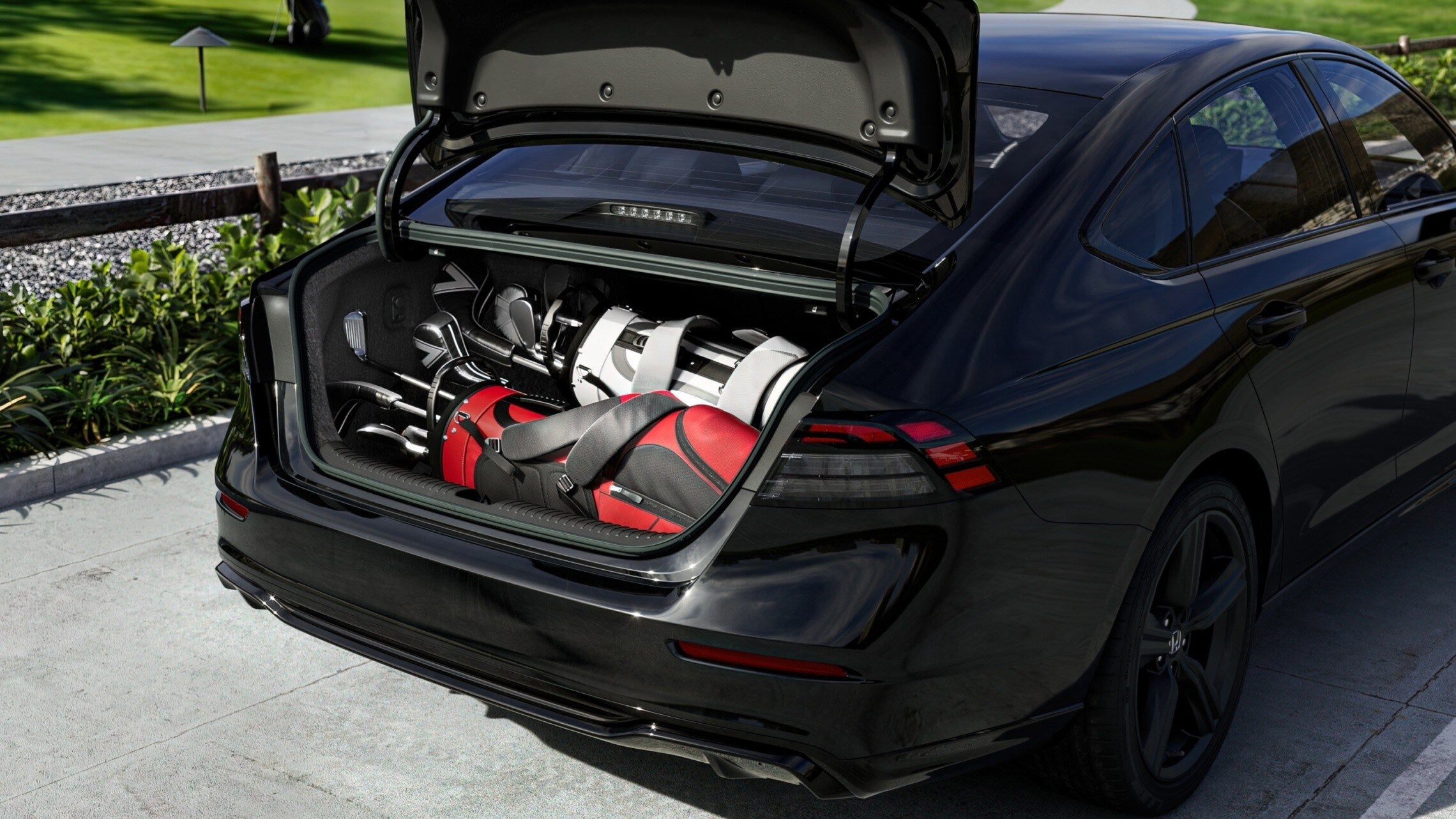
Cargo space begins with the shape of the Civic you are considering. A sedan has a separate trunk, while a hatchback gives you a taller opening and a more flexible rear loading area. That difference can matter more than a published cargo-volume figure when you are carrying a stroller, a box, or outdoor equipment.

Think about your usual cargo before comparing versions. If you mostly carry briefcases, grocery bags, or small luggage, a sedan may fit your routine well. Larger or taller items are generally easier to load through a hatchback opening, especially when you need to place something close to the rear seatbacks.

A useful first step is to make two lists:

  • Items you carry every week.
  • Items you carry only a few times a year.

Choose the body style around the first list, then confirm that the second list will fit without a stressful workaround.

2. Understand what cargo volume actually measures

A cargo-volume number is a starting point, not a promise that every object will fit. Automakers measure a defined area under specific conditions, and shoppers often imagine that space as one open rectangular box. Real cargo areas include wheel wells, seatbacks, trim, and an opening that may be narrower than the floor.

Usable space matters more than the headline measurement. A soft bag can conform to the corners, but a rigid container cannot. Height matters just as much as floor length, and the shape of the liftgate or trunk opening can decide whether a bulky item goes in easily.

Use published capacity to compare similar Civic versions, then check the details that affect your cargo:

  • Width between the wheel wells.
  • Height from the floor to the opening.
  • Length with the rear seats upright or folded.

Those are the dimensions you feel when loading real objects.

3. Think about the opening, not just the floor

Many shoppers look at the floor first and overlook the opening above it. That can lead to a frustrating surprise: an item may have enough room once inside but still fail to pass through the trunk or hatch opening. Loading angle matters, too, because a long box may need to enter diagonally before it can rest flat.

Sedan trunks are usually best judged by the shape of the aperture and the depth behind it. A hatchback offers a taller entry point, but the space may still narrow around the wheel wells or rear seat area. Checking both the opening and the floor gives you a much more realistic picture of Civic cargo usability.

Before visiting, measure the item you care about most. Record its longest side, widest side, and height, then bring those measurements with you. That simple preparation makes a showroom check faster and prevents you from relying on a visual guess.

4. Rear-seat space changes the answer

Rear-seat position affects how much room remains behind it. A tall passenger may need the seat farther back, reducing the length available for cargo. A shorter passenger may allow more room, but you should not plan around moving a seat into an uncomfortable position just to gain loading space.

If you regularly carry passengers and cargo together, test both at once. Place someone in the rear seat, adjust the front seat for a normal driving position, and then inspect the remaining area. Passenger comfort and cargo room work as a tradeoff, especially on longer trips.

Also check how the rear seats fold. A split-fold arrangement can let you carry a long object while keeping a seat available for another passenger. That flexibility is valuable for errands, but it does not turn the Civic into a dedicated cargo vehicle. Protect the seats and keep the load low enough that it does not interfere with your view or become a hazard during sudden braking.

5. Match the space to your routine

The right question is not simply, "How much cargo space does the Civic have?" Ask what you carry, how often you carry it, and whether you need passenger seating at the same time. A commuter with a laptop bag and groceries has a different need from a parent carrying a stroller, sports gear, and weekend luggage.

Create a quick cargo profile before you shop:

  • Daily items that must fit without rearranging anything.
  • Occasional items that can use folded rear seats.
  • One unusually large item that might determine your choice.

Soft-sided luggage gives you more flexibility than hard cases. Grocery bags can be placed around wheel wells, while a large cooler or pet carrier needs a clear opening and stable floor. Once you know your pattern, compare Civic versions based on loading ease rather than choosing the one that sounds roomiest in general.

6. Check how the seats fold in practice

Folded rear seats can extend the useful loading area, but the result may not be perfectly flat. Seat cushions, hinges, and the transition from the cargo floor to the seatbacks can affect how a long item rests. A small slope may not matter for soft luggage, but it can make a rigid box slide or leave it poorly supported.

Inspect the release points and see how easily you can fold the seats from the position where you normally load. If you need to walk around the car, move a front seat, or remove a head restraint every time, that process may become annoying. Convenience is part of cargo capacity because space you avoid using is not very useful.

Bring a blanket or protective mat if you plan to test a real object. Check whether the item blocks your rearward view, presses against the hatch, or leaves the cargo area difficult to close. A careful trial tells you more than a quick glance at the seatbacks.

7. Bring the item that worries you most

A showroom visit is most useful when you bring a specific question. If a stroller, musical instrument, folding bike, pet crate, or work case determines your decision, measure it and ask to test that item in the Civic. You do not need to fill the car with possessions; one representative object can reveal whether the opening and floor work for you.

Measure the item in its normal travel shape, not only when compressed or disassembled. Note whether it has wheels, handles, fragile parts, or a lid that needs clearance. Then test loading from the curb, because that is how you will use the car outside a dealership.

You can also bring a second person to sit in the rear seat while you load. That exposes conflicts between passenger comfort and cargo placement. If you want to compare versions, you can book a test drive and bring the same item each time for a fair comparison.

8. Use accessories without losing usable room

Cargo accessories can help, but they do not create extra interior volume. A liner may protect the floor from mud, while organizers keep smaller items from rolling around. Those additions are useful when they preserve order, yet bulky organizers can take away room you expected to have.

Plan around the shape of your belongings. Soft bins can make better use of corners than rigid boxes, and low containers are less likely to block your view. Keep heavy objects low and close to the seatbacks so they are less likely to move during a turn or hard stop.

Avoid stacking cargo higher than the rear seatbacks unless the load is secured and your visibility remains safe. Loose items can become dangerous in a collision, even if they seem harmless during normal driving. Good cargo management protects both space and safety, so choose restraints and storage pieces that suit what you actually carry rather than buying accessories first.

Where
1511 US-22
Annandale, NJ
KEY TAKEAWAYS
  • Start by choosing the Civic body style that fits your routine.
  • Measure bulky items by opening shape, not cargo volume alone.
  • Test your real gear before buying, especially if rear-seat flexibility matters.
FAQ

Common questions

Does every Honda Civic have the same cargo space?

No. The Civic sedan and hatchback use different body designs, so their loading openings, cargo shapes, and everyday flexibility differ. Compare the body style that matches how you carry belongings.

Is a larger cargo-volume number always better?

Not necessarily. An opening that is too narrow or low can make a larger measured area difficult to use. Check the opening, floor shape, seat-folding process, and the items you carry most often.

What should I bring when checking a Civic's cargo area?

Bring the item that creates the biggest concern, such as a stroller, pet carrier, cooler, or work case. Measure its length, width, and height, then test it with the front seat set for your normal driving position.

Can folded rear seats make the Civic suitable for any large item?

Folded seats can make room for longer objects, but they do not eliminate limits created by the opening, wheel wells, roofline, or seatback angle. Test the item in its normal shape before deciding.

How should I compare a Civic sedan and hatchback?

Use the same item and the same loading process in both. Check how easily it enters, where it rests, whether passengers can still sit comfortably, and how much rearranging you need to do.
Want to see it in person?
Come by for a test drive, or browse what is on the lot right now.
Or call (908) 255-1985 · 1511 US-22, Annandale
Posted in:

Related Posts

Honda Civic Si vs Toyota Corolla: How They Compare

Honda Civic Si vs Toyota Corolla: How They Compare

THE SHORT ANSWER The primary difference lies in their design philosophy: the Honda Civic Si is a dedicated, enthusiast-tuned sport sedan built for engaging performance, while the Toyota Corolla is engineered as a straightforward, efficient commuter car. Choosing between them depends on whether you prioritize the joy of a manual gearbox and sharp handling or basic, low-maintenance daily transportation. Are you trying to decide between a sport-tuned compact and a traditional commuter favorite? Drivers visiting Clinton Honda in Clinton Township, NJ, often ask us how the enthusiast-oriented Civic Si stacks up against the sensible Toyota Corolla. While both of these sedans have earned massive followings, they target entirely different driving experiences. $31,495 Starting MSRP 37 mpg EPA highway 14.1 cu ft Cargo space 2026 Honda Civic Si, from its published specifications. IN THIS POST The Most Common Mistake in This Comparison Driving Dynamics and Daily Engagement Cabin Comfort and Technology Safety and Driver Assistance Systems Long-Term Ownership and Reliability Total Cost of Ownership and Timing Your Purchase Key takeaways The Most Common Mistake in This Comparison Many shoppers make the mistake of comparing the Honda Civic Si and the Toyota Corolla as if they are direct rivals in the exact same category. This approach misses the core purpose of both vehicles, leading to mismatched expectations once you get behind the wheel. Different Cars for Different Drivers The Corolla is designed from the ground up to get you from point A to point B with minimal fuss, prioritizing a soft ride and straightforward controls. On the flip side, the Civic Si is a purpose-built sport sedan that demands more driver involvement and rewards you with precise feedback. Trying to compare these two solely on price or cabin dimensions ignores how differently they behave on the highway. If you buy a Corolla expecting a sporty thrill, you will likely find the handling too relaxed; conversely, if you buy an Si purely for quiet commuting, the firm sport suspension might surprise you. Checking out our new inventory shows how the Civic family segments these experiences, keeping the Si distinct from its standard commuter siblings. Taking a close look at both vehicles helps prevent the disappointment of choosing a car that does not match your daily driving habits. Driving Dynamics and Daily Engagement A distinct separation becomes obvious the moment you shift into gear. Honda equips the Civic Si with a short-throw six-speed manual transmission, complete with automatic rev-matching to make downshifts incredibly smooth even for casual drivers. This setup ensures you feel connected to the road, turning a mundane run to the grocery store into a genuinely engaging activity. The Commuter Choice vs The Enthusiast Rig Toyota equips the vast majority of Corolla models with a continuously variable transmission, focusing entirely on smooth, shift-free efficiency. While this design is perfect for bumper-to-bumper traffic where you want to zone out, it lacks the tactile feedback that makes driving enjoyable. Choosing the Honda means embracing a stiffer chassis and a limited-slip differential that helps pull the car through tight corners with impressive grip. The Corolla opts for a much softer suspension setup, absorbing bumps well but leaning noticeably when you carry speed through an off-ramp. If you want to experience this difference firsthand, we recommend that you book a test drive to feel how a sports-tuned suspension changes your daily route. Taking both on a mix of roads is the only way to appreciate how differently they handle. Cabin Comfort and Technology Step inside both cabins and you will notice contrasting approaches to driver comfort and interior styling. The Civic Si features deeply bolstered sport seats with signature red stitching, designed to hold you firmly in place during spirited cornering. These seats offer excellent lower-back support, though they sit lower to the ground than the chairs in a standard sedan. Daily Ergonomics and Tech Layout Toyota takes a more traditional approach, styling the Corolla cabin with flatter, heavily cushioned seats that make sliding in and out very easy. While the materials are durable, the overall environment feels utilitarian compared to the driver-centric cockpit of the Honda. Modern technology is well-integrated in both cars, but the execution reflects their different personalities. The Civic Si places its physical controls and customizable digital instrument cluster within easy reach, allowing you to monitor performance metrics without losing focus. If you prefer a simpler layout, the Corolla offers an uncomplicated touchscreen interface that gets the job done without any learning curve. For shoppers browsing our selection of used cars, comparing these cabins in person is often the deciding factor in which vehicle feels right. Safety and Driver Assistance Systems Safety remains a top priority for both brands, which include their proprietary suites of driver-assist technologies as standard equipment. Honda Sensing and Toyota Safety Sense both offer peace of mind on busy New Jersey highways, but they intervene in slightly different ways. Active Assistance on the Road The Honda system tends to offer smoother, more progressive steering inputs when keeping you centered in your lane. It works quietly in the background, helping reduce driver fatigue during long weekend road trips without feeling overly intrusive. Toyota's safety suite acts a bit more assertively, with audible alerts and firmer corrections if the car detects you drifting. Both systems excel at identifying potential forward collisions and applying automatic braking when necessary to mitigate impact. Whichever path you choose, staying up to date with routine upkeep when you book service with us ensures these complex camera and radar systems continue to function perfectly. This preventative maintenance is essential for keeping your active safety tech operating exactly as the manufacturer intended. Long-Term Ownership and Reliability Investing in either of these Japanese compacts generally means enjoying years of trouble-free driving and low maintenance costs. However, the Civic Si tends to follow a unique depreciation curve because of its enthusiast appeal. Retaining Value Over the Miles Because manual-transmission sport sedans are becoming increasingly rare, well-maintained Si models often command premium prices on the secondary market. Buyers actively seek them out, meaning your vehicle could retain a larger percentage of its original value than a standard commuter. Our team at Clinton Honda has won the DealerRater.com/Cars.com Consumer Satisfaction Award every year since 2015, showing our dedication to honest guidance. Being named the Cars.com NJ Honda Dealer of the Year for 2026 reflects our commitment to helping local drivers find vehicles that perfectly match their lifestyles. If you want to maximize your investment, looking through our certified pre-owned inventory can give you the best of both worlds. Total Cost of Ownership and Timing Your Purchase Before making your final decision, it is wise to look at the complete financial picture beyond the initial purchase price. Sportier vehicles like the Civic Si can sometimes carry slightly higher insurance premiums due to their performance classification. Smart Financing and Timing Fuel costs are another factor to keep in mind, as performance-tuned engines often run best on premium unleaded gasoline to deliver their full potential. The Corolla runs happily on regular octane, saving you a few dollars at every fill-up if budget-friendly daily driving is your main goal. Timing your purchase correctly can make a significant difference in your monthly payments, especially when manufacturers introduce new incentives at the end of a quarter. Our team can help you navigate competitive financing options to find a rate that fits your personal budget comfortably. Preparing these financial details ahead of time makes the transition to your new sedan smooth and stress-free. Where 1511 US-22 Annandale, NJ Call (908) 255-1985 KEY TAKEAWAYS The Civic Si is built specifically for enthusiasts, featuring a standard manual transmission and sport suspension. The Corolla focuses on maximum simplicity, offering a softer ride and a standard automatic transmission. Comparing these models requires looking past simple fuel economy to understand how each car feels on your daily commute. FAQ Common questions Is the Honda Civic Si available with an automatic transmission? No, the Civic Si is exclusively built with a six-speed manual transmission to prioritize driver engagement. If you prefer an automatic, you might want to look at other trims in the Civic lineup. What kind of fuel does the Honda Civic Si require? Premium unleaded fuel is highly recommended for the Civic Si to ensure the turbocharged engine performs at its best. Running regular gasoline may reduce performance and overall efficiency. How does the ride comfort of the Civic Si compare to the Toyota Corolla? The Corolla features a softer suspension designed to maximize comfort and absorb road imperfections quietly. The Civic Si has a stiffer, sport-tuned suspension that provides sharper handling but transmits more road feel into the cabin. Is the Toyota Corolla a sports car? No, the standard Corolla is designed as a practical, efficient daily commuter. While some higher trim levels feature sportier styling accents, the mechanical setup remains focused on reliability and fuel efficiency rather than high-performance driving. Which vehicle has better resale value? Both models hold their value exceptionally well over time. However, because manual sport sedans like the Civic Si are relatively rare, well-kept models often attract enthusiast buyers who are willing to pay a premium on the used market. Want to see it in person? Come by for a test drive, or browse what is on the lot right now. Schedule a test drive Browse new inventory Or call (908) 255-1985 · 1511 US-22, Annandale Or keep browsing Current offers Financing Value your trade Book service Contact us Used cars

How Often Does Your Honda Need a Oil Change?

How Often Does Your Honda Need a Oil Change?

THE SHORT ANSWER Most modern Honda vehicles require an oil change every 7,500 to 10,000 miles or every 12 months, whichever comes first, when using full synthetic oil. You should rely primarily on your vehicle's built-in Maintenance Minder system, which monitors your specific driving conditions and alerts you when the oil life reaches 15 percent. Determining the right oil change interval for your Honda keeps your engine running smoothly and protects your investment on the roads of Clinton Township. At Clinton Honda, we want to help you cut through the confusion and establish a clear, reliable maintenance routine. By following a few simple steps, you can easily track when your vehicle is due for fresh oil. IN THIS POST Step 1: Read the Maintenance Minder System Step 2: Identify Your Driving Style Step 3: Select the Correct Oil Grade Step 4: Schedule Your Service and Keep Records Key takeaways Step 1: Read the Maintenance Minder System Check your dashboard indicator Modern Honda engineering takes the guesswork out of maintenance by tracking your engine operating conditions in real time. Instead of relying on a static paper sticker on your windshield, your dashboard displays a digital oil life percentage. This system calculates oil depletion based on engine temperature, operating hours, and driving patterns. When the oil life drops to 15 percent, you will see a wrench icon and a maintenance code on your multi-information display. This alert is your cue to schedule an oil change before the oil loses its ability to lubricate vital components. Ignoring this indicator can lead to increased engine wear, reduced fuel efficiency, and eventually costly mechanical repairs over time. If the percentage reaches 0 percent, your oil is fully depleted, and you risk damaging internal engine parts. We recommend making an appointment as soon as the 15 percent warning appears to keep your engine in peak condition. Taking action early ensures your vehicle remains reliable for your daily travels. Step 2: Identify Your Driving Style Assess your daily commute Not all miles are created equal when it comes to engine wear. If your daily drive consists of short trips under five miles in cold weather, your engine never reaches its optimal operating temperature. This prevents water vapor from burning off, which dilutes the engine oil and shortens its lifespan. Heavy traffic in Clinton Township also accelerates oil breakdown because of prolonged idling. If you frequently tow trailers, drive on dusty roads, or operate in extreme heat, you fall under the severe driving schedule. These conditions require more frequent oil changes to protect your engine's internal components. Under these conditions, you need to change your oil more frequently than the standard recommendation. We suggest checking your manual or speaking with our service team to establish a customized maintenance interval that matches your driving habits. Proactive care under demanding conditions prevents sludge buildup and ensures your engine remains responsive for years to come. Staying ahead of these challenges protects your engine from premature aging. Step 3: Select the Correct Oil Grade Select the correct oil grade Using the wrong type of oil can void your warranty and decrease your engine's efficiency. Most newer Honda models require 0W-20 full synthetic oil, which flows better in cold temperatures and resists breakdown under high heat. Synthetic oil lasts longer than conventional oil, allowing for those extended intervals of up to 10,000 miles. You can find the exact oil viscosity required for your engine printed directly on the oil fill cap under your hood. Always look for the API certification seal on the bottle to ensure the oil meets strict industry standards. Using anything less than the recommended grade can lead to reduced fuel economy and engine friction. Using original equipment manufacturer parts and fluids is the best way to guarantee compatibility. Our parts department stocks genuine Honda motor oil designed specifically for the tight tolerances of your vehicle's engine block. Choosing the right fluid protects your internal components from friction, premature wear, and thermal breakdown during hot summer months. Step 4: Schedule Your Service and Keep Records Book your appointment and document the service Once you determine your vehicle is due for maintenance, the final step is getting the work done and keeping a clean paper trail. Consistent records are invaluable for maintaining your warranty and boosting your car's resale value when it is time to trade. Buyers love seeing a fully documented service history. At Clinton Honda, we make the process straightforward and stress-free. We've been serving local drivers with quality care for years, and our team was named the Cars.com NJ Honda Dealer of the Year for 2026. Clinton Honda has won the DealerRater.com/Cars.com Consumer Satisfaction Award every year since 2015, proving our commitment to your ownership experience. You can easily book service online to find a time that fits your schedule. Our factory-trained technicians will change your oil, replace the filter with an OEM unit, and reset your Maintenance Minder. We will also perform a multi-point inspection to ensure your Honda is ready for the road ahead, giving you complete peace of mind. Where 1511 US-22 Annandale, NJ Call (908) 255-1985 KEY TAKEAWAYS Rely on the Honda Maintenance Minder system to track oil life dynamically. Change synthetic oil at least once a year, even if you do not reach the mileage limit. Adjust your schedule if you frequently drive in severe conditions like stop-and-go traffic. FAQ Common questions Can I use regular oil instead of synthetic oil in my Honda? It depends on your specific model, but most modern Hondas require full synthetic oil to meet engine performance standards. Check your owner's manual or the oil cap for the exact viscosity and type required. Using conventional oil when synthetic is recommended can cause engine deposits and will degrade much faster. How long can a Honda go without an oil change? You should never go more than one year or 10,000 miles without changing your oil, even if your Maintenance Minder has not reached 15 percent. Over time, engine oil breaks down and loses its chemical properties, which can lead to friction damage and engine sludge. What do the Honda Maintenance Minder codes mean? The letter 'A' indicates a main engine oil change is needed, while 'B' means you need an oil change along with a mechanical inspection of brakes, suspension, and fluids. The accompanying numbers, like 1 through 6, indicate sub-items such as tire rotations, air filter replacements, or coolant flushes. Let us take care of it Book online in a minute and pick a time that works for you. Book service Order parts Or call (908) 255-1985 · 1511 US-22, Annandale Or keep browsing Current offers Financing New inventory Contact us Used cars Certified pre-owned

Leaf-Peeping Road Trip Prep

Leaf-Peeping Road Trip Prep

THE SHORT ANSWER For a safer leaf-peeping road trip, inspect your tires, wipers, lights, fluids, and emergency supplies before you leave. Plan for changing weather, limited daylight, slow scenic traffic, and weak cell service instead of treating the drive like an ordinary weekend errand. A useful first step: check your tire pressure when the tires are cold, then inspect the tread before loading the car. Clinton Honda in Clinton Township, NJ, put this guide together to help you prepare for a fall drive that stays comfortable, visible, and manageable when roads, weather, and daylight change. IN THIS POST Myth: Peak color makes any day a good driving day Myth: Tires only need attention before a long highway trip Myth: Clear glass means the vehicle is ready for changing weather Myth: Daylight means headlights are optional Myth: A phone is all the navigation and emergency equipment you need Myth: Scenic roads are quiet enough to ignore wildlife and pedestrians Myth: Passengers can bring whatever they want as long as it fits Myth: A quick look in the driveway is enough for an older vehicle Key takeaways Myth: Peak color makes any day a good driving day Fact: The best-looking weekend may not be the best time for a relaxed drive. Peak foliage often brings heavier traffic, full parking areas, pedestrians near overlooks, and drivers slowing suddenly to take in the view. Check the forecast, road conditions, and destination parking before you leave, then give yourself more time than the map suggests. A weekday morning can make the trip calmer, but it still deserves a weather check shortly before departure. Rain can reduce visibility and cover painted lane markings, while a sunny afternoon may put glare directly in your windshield. Pick a route with several safe stopping points, and avoid pulling onto a shoulder or narrow roadside just to photograph a tree. If a scenic road is unfamiliar, review its turns and elevation changes before starting. Download directions or save an offline map in case service drops along the way. Your goal is not to see every overlook; it is to enjoy a route you can drive without rushing. Myth: Tires only need attention before a long highway trip Fact: A short mountain road or winding rural route can challenge tires just as much as a long interstate drive. Look for uneven wear, cracks, bulges, and objects caught in the tread. Check pressure with a reliable gauge while the tires are cold and adjust it to the vehicle maker's recommendation, not a guess based on how the tire looks. Proper pressure helps the vehicle feel more predictable through wet curves and during braking. Tread depth matters because leaves, rain, and cool pavement can reduce grip, especially where roads stay shaded. If the steering wheel vibrates, the vehicle pulls to one side, or the tires look damaged, have them inspected before your trip. Do not forget the spare tire or tire repair kit. Confirm that the jack and lug wrench are present and that you know where they are stored. If your vehicle uses a tire-pressure monitoring system, treat a warning as a reason to stop and investigate rather than something to reset and ignore. Myth: Clear glass means the vehicle is ready for changing weather Fact: Visibility depends on more than a clean windshield. Worn wiper blades can smear rain across the glass, and a dirty inside surface can turn low autumn sun into a broad glare problem. Clean both sides of the windshield, inspect the blades for cracking or skipping, and replace them if they leave untreated patches. Check the washer reservoir before leaving and carry extra fluid if your route takes you far from services. Use a seasonally appropriate washer fluid for your expected temperatures; plain water can freeze and may not cut road film effectively. Clean the side mirrors and rear camera lens too, since spray and dust often collect there without being obvious from the driver's seat. A small microfiber cloth in the cabin helps with quick cleaning, but never wipe the windshield while driving. Pull into a safe location first. If defogging takes unusually long, the climate controls behave strangely, or moisture keeps returning to the glass, schedule an inspection before the trip. Myth: Daylight means headlights are optional Fact: Autumn sun sits lower in the sky, and wooded roads can move from bright conditions into deep shade within seconds. Turn on your headlights whenever visibility is reduced, even if the sky looks clear. Confirm that low beams, brake lights, turn signals, and hazard lights work before you set out. Ask someone to stand outside while you test the lights, or use reflections from a wall or garage door. Replace a failed bulb promptly and clean cloudy lenses if they are reducing light output. Automatic headlights are useful, but you still need to understand how your vehicle's controls work so you can respond to fog, rain, tunnels, or sudden shade. Keep sunglasses available for glare, but do not use them after dusk or in dark wooded areas. Leave enough following distance for a driver ahead to brake for a deer, cyclist, or stopped vehicle. Good visibility is a shared responsibility, especially on scenic roads where people may be looking at the landscape instead of traffic. Myth: A phone is all the navigation and emergency equipment you need Fact: A phone is useful until the battery is low, the signal disappears, or a road closure sends you onto an unfamiliar detour. Charge the phone before leaving, bring a charging cable that fits the vehicle, and save the route for offline use. Tell someone where you are going and when you expect to return, particularly if the route includes remote parks or back roads. Build the route around fuel, restrooms, food, and legal parking rather than assuming the next service area will be close. Keep an eye on your remaining fuel and avoid stretching the trip after dark simply to reach one more viewpoint. An old-fashioned printed route or written address can help if the phone fails. Check park rules and seasonal closures before departure. Some overlooks prohibit roadside parking, restrict pets, or close facilities after a certain hour. Knowing the rules in advance keeps you from making a hurried turn or stopping somewhere unsafe while trying to find an alternative. Myth: Scenic roads are quiet enough to ignore wildlife and pedestrians Fact: Wildlife activity can increase around dawn, dusk, and wooded stretches, while visitors may walk between parking areas and viewpoints. Reduce speed where sightlines are short, scan both shoulders, and avoid swerving sharply if an animal enters the road. A controlled stop is usually safer than a sudden move into another lane or toward a ditch. Watch for cyclists, walkers, motorcycles, and vehicles stopped near a viewpoint. Someone opening a door or stepping out for a photo may not notice approaching traffic. Leave room around parked cars and assume a vehicle ahead may brake without warning when the scenery opens up. Never stop in a travel lane, on a blind curve, or at the crest of a hill. Use a marked lot or a broad, legal pull-off with clear sight distance. If the lot is full, continue to the next approved stop instead of turning a memorable drive into a roadside hazard. Myth: Passengers can bring whatever they want as long as it fits Fact: Loose bags, cameras, water bottles, and folding chairs can become dangerous projectiles during a hard stop. Put heavier items low and secure them so they cannot slide into the driver's footwell or block rear visibility. Keep the area around the pedals, emergency brake, and controls clear. Wear comfortable layers because temperatures can change between an exposed overlook and a shaded trailhead. Pack water, snacks, a flashlight, basic first-aid supplies, and any medication passengers may need during a longer delay. Add a blanket or extra warm layer if you expect to be outside after sunset. Before leaving, agree on who handles navigation and where you will stop. The driver should not read directions, take photos, or adjust a complicated route while moving. A calm passenger can manage the phone and watch for signs, leaving you free to focus on curves, traffic, and changing road conditions. Myth: A quick look in the driveway is enough for an older vehicle Fact: A vehicle that starts normally can still need attention before a demanding seasonal drive. Pay attention to recent warning lights, unusual noises, fluid spots, weak heating, or braking changes. Those signs do not become less important because the trip is short or scenic. If you want a professional check before leaving, you can book service with our team. Ask for attention to the items that matter most for your route: tires, brakes, lights, wipers, battery condition, fluid levels, and climate-control operation. A focused inspection helps you address small concerns before they become a problem far from home. We’ve been helping drivers prepare for changing road conditions at Clinton Honda, and we’ve won the DealerRater.com/Cars.com Consumer Satisfaction Award every year since 2015. We were named the Cars.com NJ Honda Dealer of the Year for 2026. Those facts do not replace your own inspection, but they explain why a pre-trip conversation with a service professional can be worthwhile. Where 1511 US-22 Annandale, NJ Call (908) 255-1985 KEY TAKEAWAYS Check tires, visibility equipment, lights, and fluids before departure. Build extra time into the route for traffic, stops, and changing weather. Carry basic emergency supplies and make a clear plan for the return trip. FAQ Common questions What should I check first before a fall foliage road trip? Start with cold tire pressure and tread condition, then inspect the wipers, washer fluid, headlights, brake lights, turn signals, and emergency supplies. Look for warning lights, leaks, unusual noises, or changes in braking and steering before you leave. Is it safer to drive through leaf-covered roads slowly? Reduce speed when leaves cover lane markings, hide potholes, or make the pavement wet. Leave extra following distance, avoid sudden steering or braking, and remember that a leaf-covered shoulder may conceal a drop-off or debris. What should I bring on a scenic fall drive? Bring water, snacks, a charged phone and cable, an offline route, a flashlight, basic first-aid supplies, needed medication, warm layers, and a way to handle a flat tire. Secure bags and equipment so they cannot move around the cabin during braking. How can I prepare for limited cell service? Download maps before leaving, write down key addresses, tell someone your route and return time, and identify fuel or rest stops in advance. Keep the phone charged, but do not rely on it as your only navigation or emergency resource. When should I schedule a pre-trip vehicle inspection? Schedule one before the trip if you notice worn tires, weak brakes, damaged wipers, warning lights, unusual noises, fluid leaks, or any steering change. Even without symptoms, an inspection can be useful before a route with steep grades, heavy traffic, or limited services. Want to see it in person? Come by for a test drive, or browse what is on the lot right now. Schedule a test drive Browse new inventory Or call (908) 255-1985 · 1511 US-22, Annandale Or keep browsing Current offers Financing Value your trade Book service Contact us Used cars