
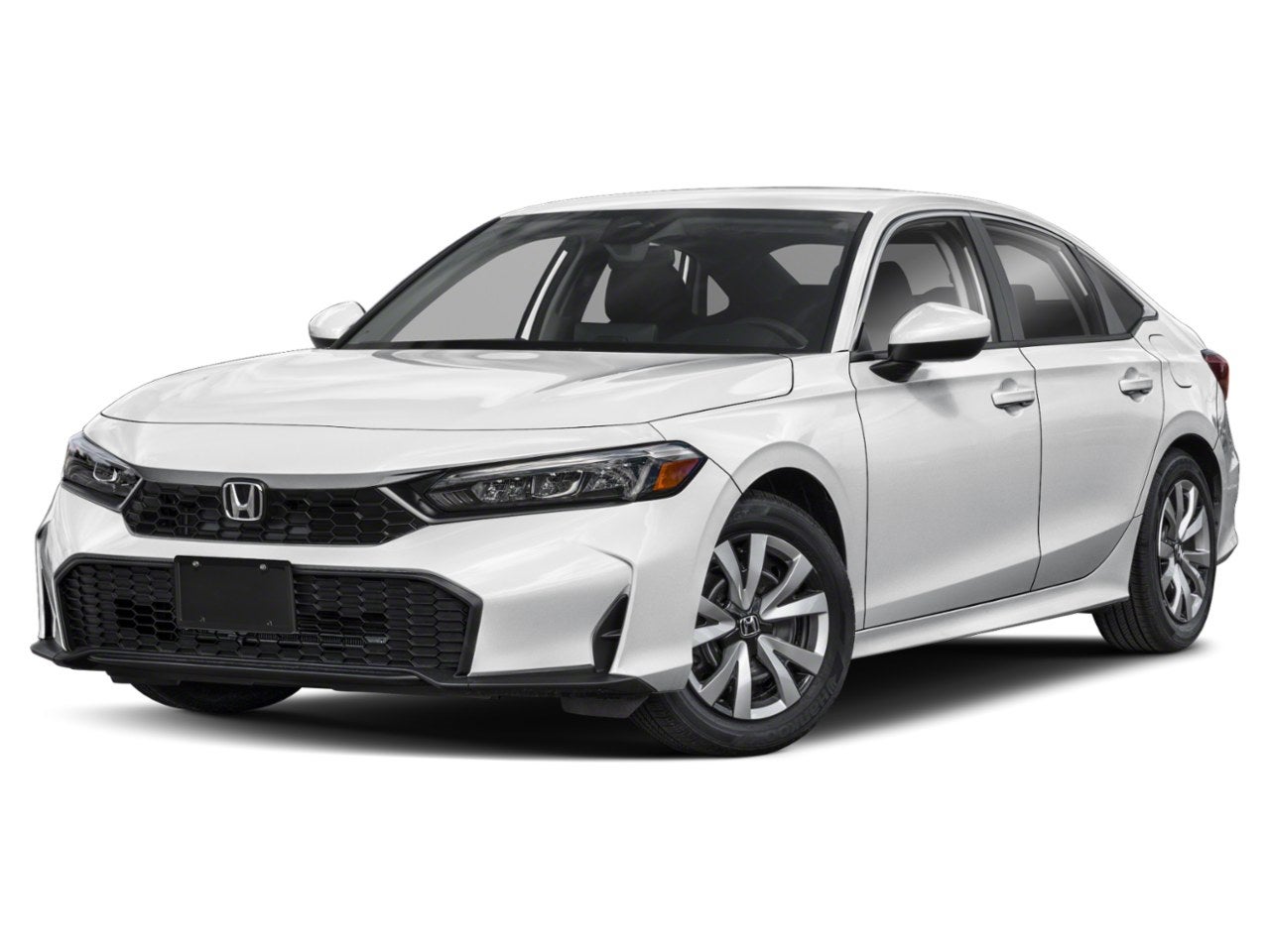
What does Honda Sensing actually do when you're behind the wheel of a 2026 Civic? Civic shoppers ask us that question at Clinton Honda in Annandale all the time, and the feature names on a window sticker don't always make the answer clear. We'll walk through what's in the suite, how it sees the road, where it helps and where it backs off, so you know what you're getting before you commit.
- The Short Answer: What Honda Sensing Does for You
- What's Included in Honda Sensing
- How the Cameras and Radar Work Together
- How It Behaves on the Roads Around Annandale
- What It Can and Can't Do
- Adjusting It to Suit the Way You Drive
- Keeping the Sensors Seeing Clearly
- Trying It Out on a Test Drive
- Key takeaways
The Short Answer: What Honda Sensing Does for You
Honda Sensing is Honda's name for a group of driver-assistance features that watch the road ahead and step in when something looks wrong. On the 2026 Civic it comes standard, so you don't have to hunt for a package or a pricier trim to get it.
Think of it as a second set of eyes that never blinks. It can warn you about a slowing car, nudge you back toward your lane, and keep a steady gap in highway traffic. When a warning isn't enough, some features will brake or steer on their own.
What it won't do is drive for you. You're still the driver in every sense, and the system is designed around that idea. Its real job is to buy you time: a chime a moment earlier, or a touch of brake before your foot gets there.
That's why Civic shoppers bring it up with us so often. It's part of the car on a base model or a sportier one from our new Civic inventory, so understanding Honda Sensing is part of understanding the Civic itself.
What's Included in Honda Sensing
Honda groups several features under the Sensing name. Here's what each one does in everyday terms:
- Collision Mitigation Braking System: watches for vehicles, and in many cases pedestrians, ahead of you. It warns first, then can apply the brakes if you don't respond.
- Forward Collision Warning: the alert side of that system, a chime and a dash message when you're closing in too fast.
- Road Departure Mitigation: if you start drifting off the road or across solid lines without signaling, it can steer and even brake to pull you back.
- Lane Departure Warning: a lighter-touch alert when you wander toward the lines.
- Lane Keeping Assist System: on highways, it makes small steering corrections to help keep you centered.
- Adaptive Cruise Control: holds a following distance you choose, slowing down and resuming with traffic.
- Traffic Sign Recognition: reads speed limit signs and shows them on the dash.
- Auto High-Beam Headlights: switches your high beams on and off on dark roads based on traffic ahead.
Some trims add related features outside the core bundle, such as blind spot information. We're glad to walk you through exactly what a specific trim has before you decide.
How the Cameras and Radar Work Together
Two main sensors feed Honda Sensing. A camera mounted high on the windshield, near the rearview mirror, reads lane markings, signs and the shapes of cars and people. Up front, a radar unit sends out radio waves and measures what bounces back, which tells it how far away things are and how quickly they're moving.
Each sensor has a weak spot, and the other covers it. A camera is great at recognizing what something is but less sure about exact distance, especially at night. Radar judges distance and closing speed well but can't read a lane line or a sign.
Why combining them matters
When both sensors agree that a car ahead is braking hard, the system can act with more confidence and fewer false alarms. That sensor fusion is why adaptive cruise feels smooth rather than jumpy, and why collision braking is saved for real threats instead of shadows or overpasses.
Behind the scenes, the car's computer weighs both inputs constantly and decides whether to stay quiet, warn you or step in. Most of the time you won't notice anything at all, which is exactly how it should feel.
How It Behaves on the Roads Around Annandale

Around here you get a little of everything, and Honda Sensing acts differently depending on the road.
On I-78, adaptive cruise is the feature you'll appreciate most. Set your speed and following gap, and the Civic eases off when someone merges in front of you near the Clinton exits, then picks back up once the lane clears. Lane keeping adds light steering help on the long, well-marked stretches.
Route 31 and Route 22 are a different story, with traffic lights, turning cars and shopping-center entrances. Here the collision warning and braking do the heavy lifting. You may get an alert when a car ahead turns sharply into a lot; that's the system being cautious, not malfunctioning.
Back roads through Hunterdon County bring faded or missing lane lines, tight curves and dark stretches at dusk. Expect lane keeping to switch itself off when it can't find lines to follow, and auto high beams to earn their keep where there are no streetlights. Knowing which feature fits which road makes the whole system feel far less mysterious.
What It Can and Can't Do
What it does well
Honda Sensing shines at the repetitive, attention-draining parts of driving: holding a gap in traffic, keeping you centered on a highway, and catching the moment your eyes leave the road just as the car ahead slows. Those are the situations where an early warning matters most.
Where it reaches its limits
It can't see everything, and it isn't meant to. Conditions that commonly reduce what it can do include:
- Heavy rain, snow, fog or road spray
- Low sun shining straight into the camera
- Dirt, ice or a sticker blocking the windshield or front of the car
- Faded lines, construction zones and lane shifts
- Sharp curves, steep hills and cross traffic at intersections
When it can't work reliably, the system tells you with a dashboard message and steps back. Keep your hands on the wheel and your attention on the road; lane keeping will remind you if it senses you've let go. It also may not react to small objects, debris or animals, so treat each alert as help, never as a promise.
Adjusting It to Suit the Way You Drive
Not every driver wants the same amount of chatter from the car, and Honda gives you room to tune it.
Through the settings on the center display and the steering-wheel controls, you can typically:
- Choose how early the forward collision warning alerts you
- Pick the following distance for adaptive cruise, from snug to roomy
- Turn lane keeping on or off with a steering-wheel button
- Adjust how road departure mitigation warns and responds
Our advice is to live with the defaults for a week or two. Plenty of people who find the alerts too eager on day one discover they were simply following closer than they realized. Once you know your habits, set the warning distance to match.
We'd steer you away from switching off collision braking or road departure mitigation entirely. Those are the features most likely to matter in the one moment you're distracted. If something feels off, stop by and we'll go through the menus with you, sitting in your own car.
Keeping the Sensors Seeing Clearly
Honda Sensing only works as well as its sensors can see, so a little care goes a long way.
Keep the windshield clean in the area in front of the rearview mirror, and clear snow and ice from the front of the car before you drive, not just a peephole on the glass. In winter, a film of road salt builds up quickly on I-78, and that alone can trigger a sensor message.
When calibration comes into play
If your windshield is replaced, or the front end is repaired after even a minor bump, the camera or radar may need recalibration. A sensor aimed even slightly off can misread lanes or distance. That work calls for the right equipment and procedures, so ask about it any time glass or bodywork is involved.
Our service team can check calibration and look into warning messages if you see them. You can book service online whenever a Sensing alert won't clear or the car seems to behave differently than it used to.
Trying It Out on a Test Drive
Reading about these features only gets you so far. You'll understand Honda Sensing much faster by feeling it, so when you book a test drive, plan a route that covers a few kinds of road.
Here's what we suggest trying:
- A highway stretch to set adaptive cruise and feel how the Civic manages the gap
- Lane keeping on a well-marked road, hands resting lightly on the wheel
- Slower traffic to see how smoothly the car eases off and resumes
- A quick look through the settings menu before you pull out
Ask whoever rides along to point out the dash indicators, so you know what the icons mean before you're on your own. Don't try to trigger collision braking on purpose; we'll explain how it works rather than test it in real traffic.
We've won the DealerRater.com/Cars.com Consumer Satisfaction Award every year since 2015. We were also named the Cars.com NJ Honda Dealer of the Year for 2026. Whatever you decide, we'll keep the answers plain and the pace relaxed.
Annandale, NJ
- Honda Sensing comes standard on the 2026 Civic and pairs a windshield camera with a front radar unit.
- It helps you react sooner, but bad weather, faded lane lines and tricky traffic can limit it.
- A test drive on both highway and local roads is the fastest way to learn how it feels.