
No matter what the reason is, getting into a car that won’t start when you turn the key is never a good feeling, especially when your mind is left to wander through all of the possibilities of why. Learn about some of the reasons why your Clinton Honda may not be starting.
Battery
Perhaps the most common reason why a car won’t start is due to a dead or faulty battery. You can usually tell that it is the battery when you turn the key and there is silence or a clicking noise. You will then need to check the cable connections in the battery terminal. Look for any signs of corrosion. Sometimes the battery may just be dead altogether. This could be because you left a light or something on in your car, or it could be because the battery is just old and needs to be replaced.
Fuel Supply or Spark Plugs
Other common reasons why your car may not start could be due to an issue with the fuel supply or the spark plugs. You can usually tell that this is the issue when your car cranks over but won’t actually start. You should then check the fuel supply to your engine, and check that there is an electrical spark getting to your spark plugs.
Carburetor or Fuel Injection
If you can actually get your engine to start but then it dies, you may have an issue with the carburetor or the fuel injection, depending on which one your car has. This is also possible for cars that won’t start on cold mornings. You may be able to check the carburetor yourself, but if it is an issue with the fuel injection you will need professional help.
![[Facebook]](https://www.clintonhonda.com/blogs/626/wp-content/plugins/bookmarkify/facebook.png)
![[LinkedIn]](https://www.clintonhonda.com/blogs/626/wp-content/plugins/bookmarkify/linkedin.png)
![[Twitter]](https://www.clintonhonda.com/blogs/626/wp-content/plugins/bookmarkify/twitter.png)
![[Yahoo!]](https://www.clintonhonda.com/blogs/626/wp-content/plugins/bookmarkify/yahoo.png)
![[Email]](https://www.clintonhonda.com/blogs/626/wp-content/plugins/bookmarkify/email.png)
The 2015 Honda Pilot from Your Phillipsburg Area Honda Dealer Has an Awesome Style of its Own
The Honda Pilot is a large and powerful 8 passenger crossover SUV. What is great about this vehicle is that it gives you a car-like driving experience with a smooth ride and great 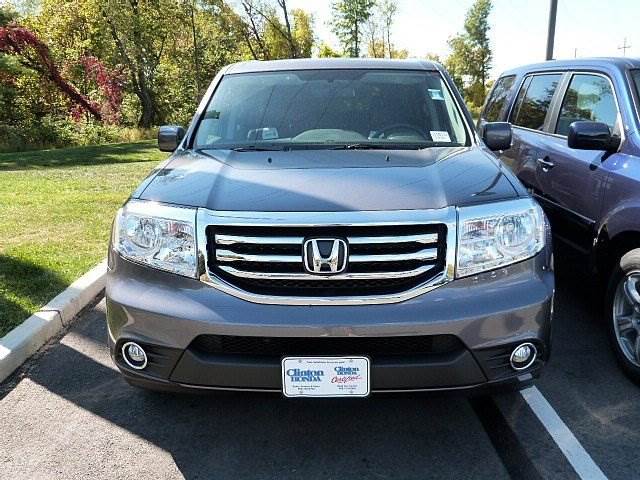 handling. It’s highly durable and functional. This vehicle is different because it has a unique style to it that really doesn’t compare to others in its class. The 2015 Honda Pilot from your Phillipsburg area Honda dealer has an awesome style of its own.
A Look at the Outside
The outside of the 2015 Honda Pilot has 18” x 7.5” front and rear alloy wheels, and 235/60-18 front and rear all-season tires. The front and rear bumpers are body-colored, and the driver and passenger power door mirrors are body-colored and heated. There are halogen headlights that have complex surface lenses, headlight control, dusk sensor, fog lights, and intermittent windshield wipers.
A Look at the Inside
The interior of the 2015 Honda Pilot has alloy-look trim and cloth upholstery. The driver has a powered bucket seat. The front passenger has a bucket seat, and the rear passengers have split-folding seats with manual recline and fore/aft. The third row passengers have a split-folding bench that folds flat to the floor. It has seating for three.
- AM/FM radio and CD player
- Color screen
- Steering wheel audio controls
- Seven speakers subwoofer
- Element antenna
- Cruise control
- Rear camera parking distance sensors
Our Bridgewater Area Honda Dealer Says that the 2015 Honda Accord Sedan EX-L is One of the Best Family Cars
The Honda Accord is Honda’s largest car, and it’s one their most popular ones, too. You can comfortably seat 5 passengers in spacious style, and still have a generous amount of space 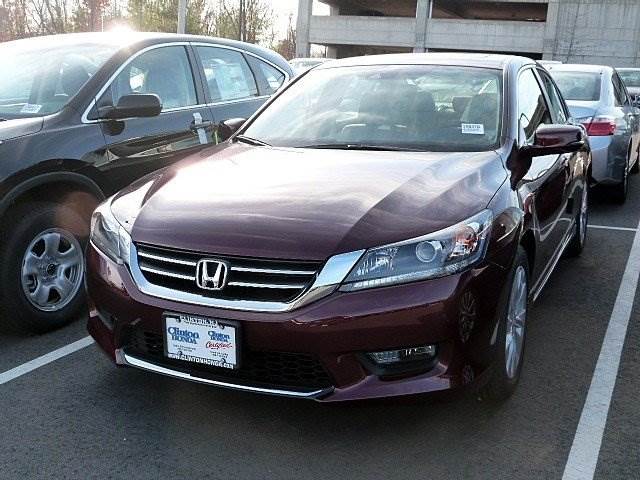 for your cargo. This vehicle is stylish and offers many great family features. Our Bridgewater area Honda dealer says that the 2015 Honda Accord Sedan EX-L is one of the best family cars out there.
The Interior
The interior of the 2015 Honda Accord Sedan EX-L has alloy-look trim, a leather-trimmed steering wheel, and leather upholstery. The driver has a heated bucket seat with 10-way power adjustments that include memorized height, lumbar, and memorized tilt. The front passenger has a heated bucket seat with power adjustments. The rear seats are folding. Stay comfortable with your ventilation system that has a micro filter, passenger ventilation controls, and dual-zone climate control.
Entertainment
The 2015 Honda Accord Sedan EX-L has a great audio system that includes an AM/FM radio, a CD player that reads MP3 format, satellite radio, touch screen and color screen. It has seven speakers and a subwoofer. You will have remote audio controls right on the steering wheel. There is an element antenna.
Safety
The 2015 Honda Accord Sedan EX-L works hard to keep your family safe with intelligent driver and passenger front airbags, front side airbags, and front and rear curtain airbags. It has five height-adjustable front and rear seat head restraints. You will have Multi-Angle Rear View Camera rear parking distance sensors.
If you’re on the hunt for something that is practical, versatile, and affordable, then take it from the consumers themselves and check out an all new Honda Fit EX. This vehicle has been 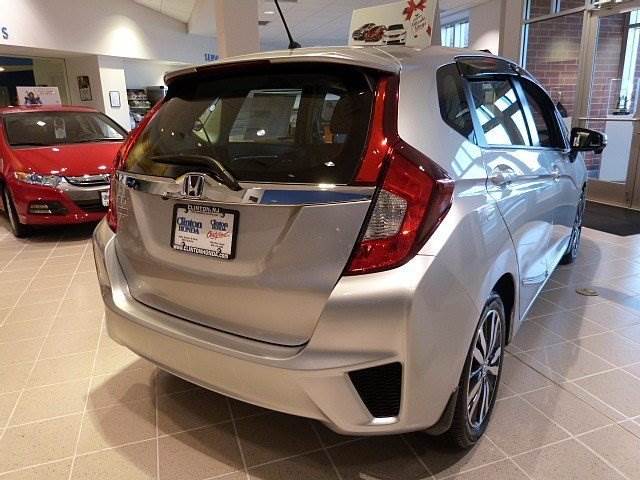 completely redesigned for 2015. Find out why consumers love the 2015 Honda Fit EX from your Clinton Honda dealer.
What’s New For 2015
For 2015, the Honda Fit EX has received a full overhaul. It has been totally redesigned. It offers brand new technology and safety features. The interior is more spacious than ever, and it has improved fuel economy.
What Consumers Are Saying
Consumers are ranting and raving about the functionality of the 2015 Honda Fit EX. It offers an impressive array of electronic functions. It has great gas mileage. It handles well and has a lot of power. It’s very spacious, with enough leg room and head room for tall adults.
Popular Features
Some of the most popular features of the 2015 Honda Fit EX include an AM/FM radio, a CD player, touch screen and color screen. There is a tilt telescoping steering wheel, and speed-proportional and Motion Adaptive Electric Power Steering. It has steering wheel audio controls, six speakers, and a roof antenna. Other useful features include cruise control, card key power locks, a ventilation system that has a micro filter, and an electric glass sunroof. You will have Multi-Angle Rear View Camera rear camera parking distance sensors.
 Once upon a time, leases were the worst option for the people who didn’t have options. They were like adjustable rate mortgages, causing balloon payments and uncertain costs down the road. These days, leases are much more refined and favor the lessee. But it can still be tough to decide whether it’s better to lease or to buy, so your Clinton Area Honda dealer helps you make the choice.
Distance Travelled
The main thing to consider when deciding between a lease and buying is how far you’ll be traveling. If you’re a long-distance commuter, a lease will likely cost you. Most leases are capped at 12 or 15,000 miles per year. Even if you could stay just under that by getting to work and back, always take into account extra mileage that just comes up in the normal business of getting around. If you’re a serious driver, buying with a good warranty is likely a better option.
Finances
One of the biggest factors. If you don’t have a lot for a down payment and can’t necessarily afford the larger payments that come with financing, a lease is a good option. Often, putting a bit less down for a lease can get a payment that is much more manageable. Likewise, monthly payments from buying can go on for five or ten years.
Long-term Plans
This is possibly the most important. If you’re hoping to hand the car over to someone else, obviously a lease won’t do. On the other hand, if you like to get the newest cars with the newest gadgets, many companies have loyalty programs that give you a discount for coming back every two or three years.
The minivan has been around for decades. For a long time, it was the last resort of the large family. A sedan was too small and so the only option was the van. But a funny thing happened about ten years ago: automakers started realizing the even minivans could be filled with performance and features. Your Hackettstown Area Honda dealer gives you the tour of the 2015 Odyssey EX-L.
Under the Hood
The Odyssey begins with a 3.5-liter V6 engine. Through variable valve timing, multi-point fuel injection, and a six-speed automatic transmission, it offers 248 horsepower and 250 pounds of torque at the same time that it offers an EPA-estimated 28 miles per gallon on the highway.
Capabilities
The Odyssey boasts more than 170 cubic feet in passenger volume and so seats eight more than comfortably. Meanwhile, fold-away seats offer over 148 cubic feet of cargo volume. The Odyssey can take on nearly 1,500 pounds in payload and can tow up to 3,500 pounds. What’s more, it uses four-wheel, anti-lock disc brakes to control anything or anyone you carry.
The Safety
In addition to brakes, the Odyssey uses a brake force distribution system to help come to a stop quicker. It has electronic traction and stability control for staying on the road and a rear view camera with parking sensors for eyes in the back of your head. In case of an accident, it has intelligent front airbags that use sensors to adapt to crash conditions. These are augmented by side and curtain airbags for all three rows of seating.
Features Galore
The EX-L comes with a seven-speaker audio system that is SiriusXM ready, touchscreen controlled, and sub-woofer boosted. A leather interior, it comes with heated front seats and triple-zone automatic climate control.
 Google has become the single stop for most of us. From weather to websites and sports scores to sales, Google is undoubtedly the heaviest hitter on the web. But Google has other interests, too. Phones and driverless cars, yes, but now Google is also working on its own car insurance offerings and your Phillipsburg Area Honda dealer wants to give you the scoop.
The What
The company is called Google Compare Auto Insurance Services and it’s managed to get licenses to sell or broker insurance in 26 states on behalf of six different insurance companies. What it will mean is you will be able to go to Google, search for insurance rates depending on your information, and then click to buy. The idea is that Google will be able to present you with as many as six different rates side by side for you to compare, hence the name.
The Why
Google knows that to survive as a business you need to grow, change, and adapt. Car insurance is rapidly moving online. Companies like Geico and Esurance have made it almost unreasonable to call someone or visit an actual store front. More and more, Google is looking to get into the games people search for the most. A lot of people use Google to search for a car insurance company, so it would be even better if they just kept clicking with Google itself.
The Result
It’s pretty unlikely that Google will ever offer to actually insure anything. The risk is too high for their other businesses, but it’s likely that before long you’ll be able to buy all manner of things through your search engine.
 If you’ve been looking for a new or pre-owned car, there’s something you should know. In today’s world, the lease option has become clearer and more achievable for more people. The side benefit of this is a whole market of recent model year vehicles at deep discounts. Your Bridgewater Area Honda dealer has these incredible deals on 2012 models.
2012 Ford F-150 Platinum
The Ford F-150 has been a staple in the pickup market for decades. It’s no wonder, really. With a 5.0-liter V8 engine, the F-150 delivers 360 horsepower and 380 pounds of torque. With four-wheel drive and a six-speed automatic transmission, it can handle over 1,700 pounds in payload and over 11,000 pounds in towing capacity. With its crew cab, it seats five comfortably, with its four-speaker audio system it entertains, and with its climate control it eases.
2012 Volkswagen GTI
If you’re looking with less muscle and more sport, the GTI features a 2.0-liter, in-line four-cylinder engine that is turbocharged to give 200 horsepower and 207 pounds of torque. With manual transmission and front-wheel drive, this is a driver’s car. Premium interior, an eight-speaker audio system with SiriusXM readiness, heated seats, and on-board navigation are just the beginning.
2012 Honda Accord SE
If you’re in need of something a bit more family-friendly, the Accord boasts a 2.4-liter, in-line four-cylinder that is incredibly fuel efficient with dual overhead cams and variable valve timing. At 177 horsepower and 161 pounds of torque, the Accord is no mouse, but with four-wheel, anti-lock disc brakes and intelligent front airbags, the Accord is also not reckless. In fact, with strategic crumple zones, electronic traction and stability control, and side and curtain airbags, the Accord is one of the safest vehicles on the road.
In recent years, a great deal has changed in terms of automotive safety. Each day seems to bring new advancements in radar and computer technology to make cars smarter and safer. So how does this affect the more “concrete”? The National Highway Traffic Safety Administration has some changes in store and your Flemington Area Honda dealer tells you all about them.
Distracted Driving
The first phase of distracted driving is in effect almost everywhere. This is where the texting while driving laws came from as well as the hands-free device mandates. What’s coming in phase two will affect personal consumer electronics and users. It will mean requiring more capacity for hands-free and safer use.
Crash Avoidance
Several studies are finding that crash avoidance technology like automatic stopping saves real lives. While it will take a long time for regulations to be fully incorporated, the NHTSA has already hinted that it will make automatic or “driverless” technologies mandatory in newer models. This will primarily focus on warnings for ordinary hazards like blind spots and backing up, but will also be looking at vehicle-to-vehicle communication technology that allows cars to recognize one another over a larger infrastructure.
Enforcement
Because of the sharp increase in recalls in the last few years, the NHTSA is likely to step up its enforcement dramatically. The agency will be taking harder looks at companies and policies alike. They’ll also be auditing the effectiveness of early detection methods at manufacturers and, most likely, increasing the number of penalties as well as their gravity.
As spring slowly approaches, several auto manufacturers have hinted at overhauling tried and true models. Recently, Honda has teased their fans with a new look for the Ridgeline. The benefit for the buyer? Dealers are extra motivated to make room for new year models. That’s the case with your Clinton Area Honda dealer and the 2015 Ridgeline SE.
Under the Hood
The Ridgeline begins with a 3.5-liter V6 engine with overhead cams, multi-point fuel injection, and variable valve timing. That means that it offers 250 horsepower and 247 pounds of torque at the same time that it offers an EPA-estimated 21 miles per gallon on the highway.
What It Can Do
With a five-speed automatic transmission and four-wheel drive, there’s not much the Ridgeline can’t handle. In addition to being able to take on a payload of nearly 1,500 pounds and a towing capacity of 5,000 pounds, the Ridgeline seats a five-man crew in its roomy cab.
Safety Above All
In addition to four-wheel, anti-lock disc brakes that help control anything you’re hauling, the Ridgeline also comes with intelligent airbags that adapt to crash conditions to minimize injury. These are supported by side and curtain airbags to protect the entire cabin. Finally, a rear-view camera with parking sensors just makes your job that much easier.
Life’s Little Extras
Leather interior, sunroof, heated front seats, and a seven-speaker audio system with subwoofer are just the start. The Ridgeline SE also comes with on-board navigation with map and voice.
Connect with us

Recent Blog Entries
- What Makes a Honda Dealer in Hunterdon County NJ Truly Local
- NJ Incentives and 3-Year Cost: Prologue EV vs. CR-V Hybrid vs. Gas
- Lifestyle Matchmaking for a Honda HR-V in New Jersey
- Choosing a Used Honda CR-V in NJ for Year-Round Family Driving
- Understanding Honda Maintenance Schedules for New Jersey Driving